
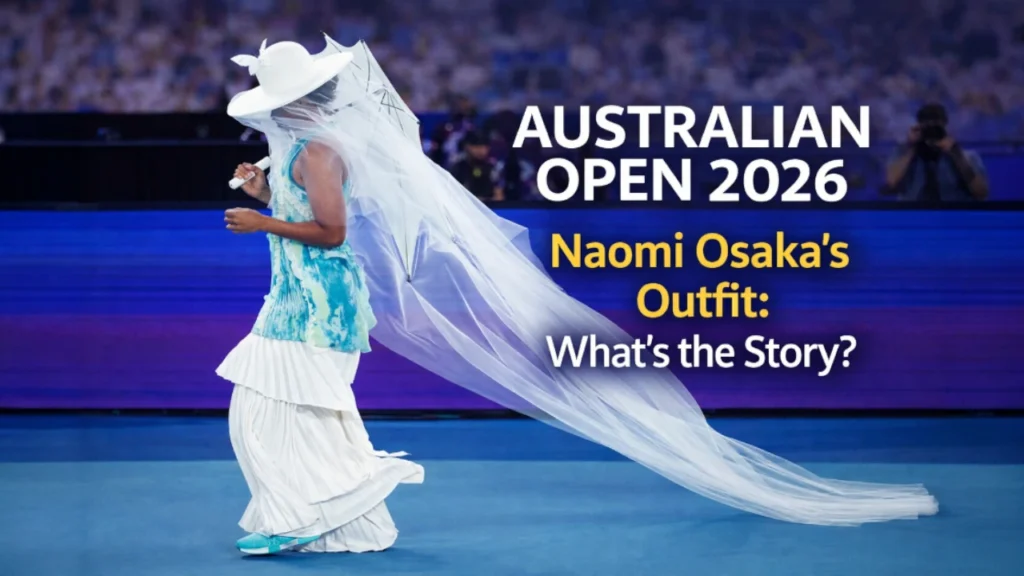
The Australian Open 2026 is proving to be far more than just the first Grand Slam of the year. As matches heat up in Melbourne, the tournament has once again become a global cultural moment — blending elite tennis, personal comebacks, and unexpected fashion statements that are dominating social feeds and headlines.
Naomi Osaka’s return and expressive presence have made the Australian Open one of the year’s most talked-about sporting events.
Why the Australian Open Always Sets the Tone
Held every January, the Australian Open is known for more than its hard courts and summer heat. It often establishes:
- The narrative of the tennis season
- Early signals of player form and comebacks
- Breakout moments that extend beyond sport into culture and media
In 2026, that pattern is unmistakable. While the draw features familiar names and rising contenders, much of the attention has been pulled toward moments that blend sport with identity and storytelling.
Naomi Osaka’s Return Feels Bigger Than Tennis
Naomi Osaka’s return to the Australian Open carries weight beyond match statistics. Following seasons away for health, motherhood, and balance, her re-entry has been met with both curiosity and support.
But what pushed her return into global conversation wasn’t just her game — it was how she chose to show up.
The Jellyfish-Inspired Outfit That Sparked Global Buzz
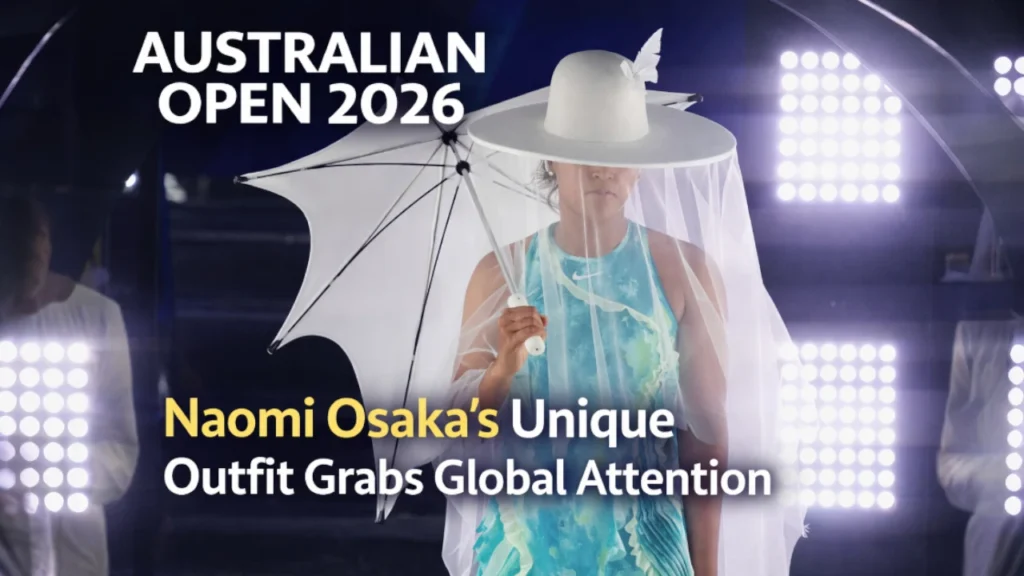
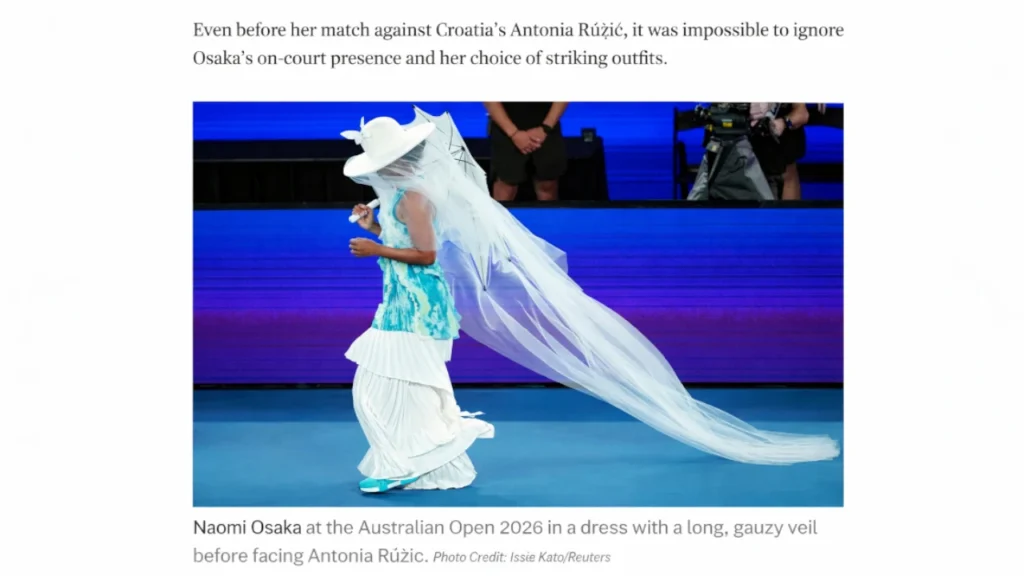
Osaka’s Australian Open outfit, inspired by jellyfish imagery, quickly became one of the most photographed and discussed fashion moments of the tournament. The design reportedly symbolized themes of fluidity, resilience, and adaptation — ideas that many fans connected directly to her personal journey back to professional tennis.
Major international outlets highlighted how the look blurred lines between:
- Athletic performance wear
- High-fashion symbolism
- Personal storytelling on a global stage
In a tournament historically known for clean whites and conservative kits, Osaka’s outfit stood out — not as a gimmick, but as an expression.
This moment reinforced a growing reality in modern sports: athletes are no longer just competitors; they are cultural voices.
Fashion Is Becoming Part of the Australian Open Narrative
Osaka’s moment fits into a larger shift at the Australian Open. Tennis fashion has evolved rapidly in recent years, and Melbourne has emerged as the Grand Slam where experimentation feels most welcome.
Why fashion moments matter here:
- The Australian Open opens the season → media attention is concentrated.
- Matches are played in daylight → visuals dominate coverage.
- Players increasingly use style to communicate identity.
In 2026, Osaka didn’t just wear an outfit — she set the aesthetic conversation of the tournament.
Tennis Results Still Matter — and So Do the Stories
While style and symbolism are drawing headlines, the sport remains competitive and compelling.
Early rounds of the Australian Open 2026 have already delivered:
- Intense baseline battles in both singles draws.
- Breakout performances from younger players eager to disrupt the established order
- Strong showings from experienced names aiming to capitalize on early-season momentum
Players like Stefanos Tsitsipas, emerging European talents such as Antonia Ružić, and several unseeded challengers have added unpredictability to the tournament atmosphere.
But what distinguishes this Australian Open is how results and relevance are running in parallel — neither dominating the other.
Why Naomi Osaka’s Moment Resonates So Widely
Osaka’s jellyfish-inspired look resonated because it tapped into broader cultural themes:
- Mental health conversations in elite sport
- The idea that success doesn’t require silence or conformity
- The growing acceptance of athletes telling their own stories, on their own terms
In an era where fans increasingly value authenticity, Osaka’s appearance felt intentional — not performative. It reminded audiences that elite competition and self-expression don’t have to be opposites.
The Australian Open’s Role in Shaping Sports Culture
The Australian Open has quietly become the Grand Slam where culture, experimentation, and narrative collide. It’s where:
- Comebacks feel most visible.
- New identities are introduced.
- Tennis crosses into broader internet culture.
From night-session atmospheres to off-court style statements, Melbourne consistently delivers moments that go viral without trying to.
In 2026, Naomi Osaka’s return has become one of those defining snapshots — likely to be remembered long after the final trophy is lifted.
What to Watch Next at Australian Open 2026
As the tournament progresses, expect attention to remain split between:
- Key matchups and title contenders
- How players handle pressure in the season’s first Slam
- Cultural moments that push tennis beyond its traditional boundaries
Whether Osaka’s campaign ends in a deep run or an early exit, her influence on this year’s Australian Open is already secured.
Final Thought
The Australian Open 2026 is a reminder that modern sports aren’t just about winning points — they’re about connecting moments. Naomi Osaka’s return, her symbolic outfit, and the reaction it sparked show how tennis continues to evolve alongside the world watching it.
And once again, Melbourne has proven to be where that evolution begins.