
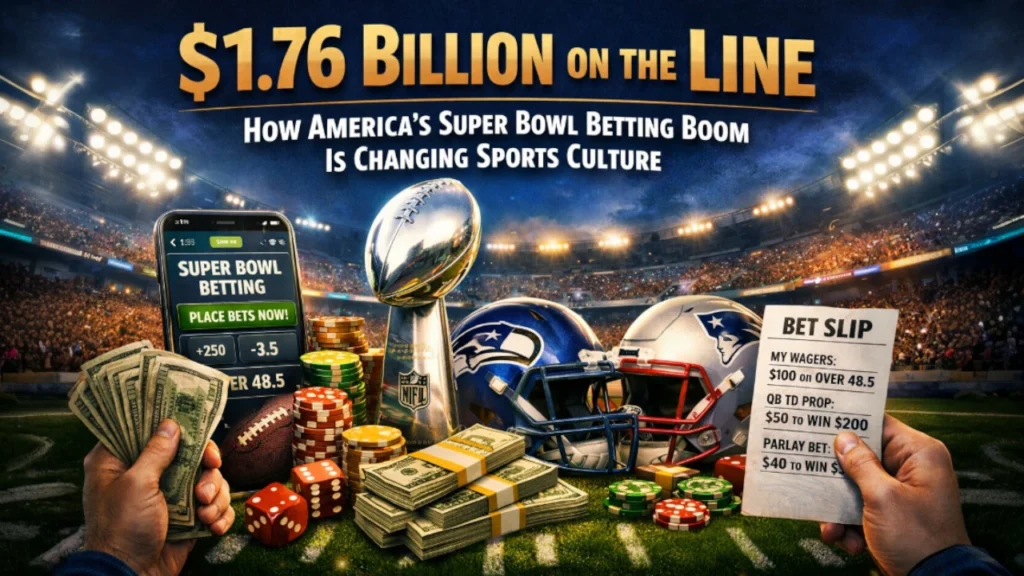
On Super Bowl night in America, something strange happens.
The game begins—but for millions of people, the action isn’t just on the field. It’s on phones. Group chats. Betting apps. Living room debates over spreads, props, and player stats that used to matter only to analysts.
This year, Americans are expected to legally bet $1.76 billion on the Super Bowl.
That number isn’t just big.
It’s a cultural signal.
Because the Super Bowl is no longer just a game you watch.
It’s a game you participate in—financially, emotionally, socially.
And that shift is quietly reshaping how sports culture works in the U.S.
When Betting Left the Shadows
Not long ago, sports betting lived on the fringes.
Office pools. Quiet bookies. “Just-for-fun” wagers passed under the table.
Fans talked scores, not odds.
Then legalization arrived state by state. Apps made betting effortless. And suddenly, numbers that once scared casual fans—moneylines, parlays, over/unders—became part of everyday sports talk.
You don’t need to be a “gambler” anymore.
You just need curiosity.
A friend places a $5 bet.
Someone explains a prop wager during halftime.
You try one “just to see.”
And that’s how it spreads.
The New Kind of Super Bowl Viewer
Here’s what’s changed most:
People who barely cared about football now stay glued to the screen.
Not because they love the teams.
Because they love the stakes.
A running back needs 10 more yards.
A quarterback must throw one more touchdown.
A coin flip at kickoff suddenly matters.
Every play becomes personal.
That’s the quiet genius—and danger—of betting-driven fandom.
The game stretches beyond loyalty. You don’t root for a team anymore. You root for outcomes.
And sometimes, those outcomes clash with the actual game itself.
How Betting Changed Super Bowl Conversations
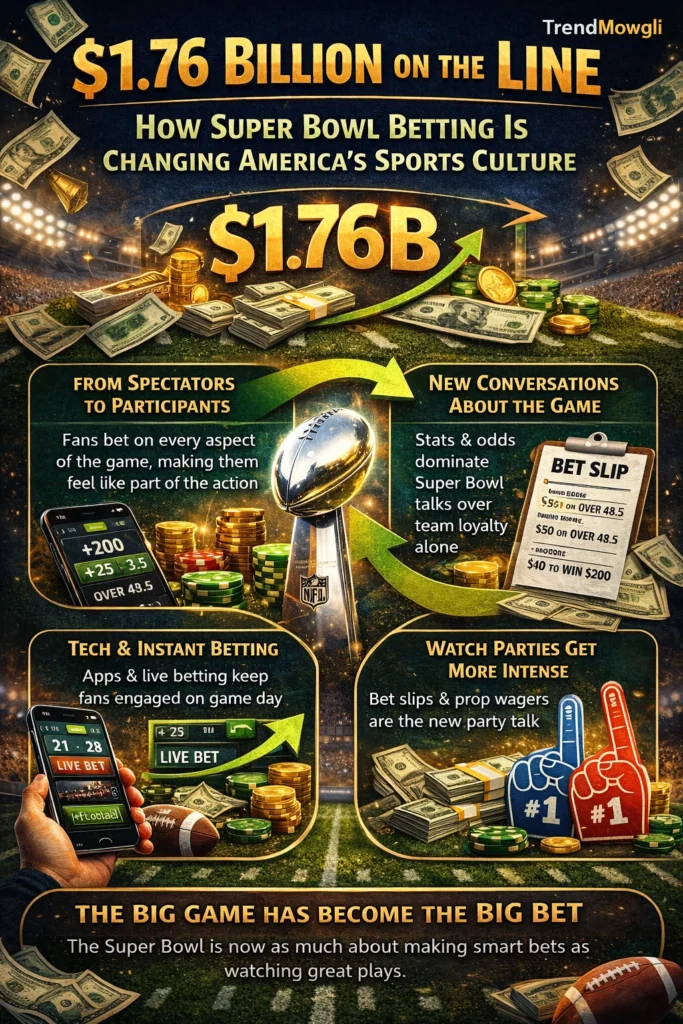
Listen carefully on Super Bowl Sunday.
You’ll hear fewer debates about legacy or strategy.
More questions like:
- “Is he hitting the over?”
- “Who scored first?”
- “That ruins my parlay.”
Friends who support rival teams suddenly want the same thing—for one drive, one throw, one catch.
Sports talk has become statistical.
Tribal loyalties blur.
The narrative splits.
Some fans still watch for history.
Others watch for profit.
Most now do both.
The Apps That Turned Fans Into Traders
Betting apps didn’t just make wagering legal.
They made it frictionless.
Push notifications nudge users mid-game.
Live odds update every second.
Micro-bets turn moments into markets.
You’re no longer committing before kickoff.
You’re reacting in real time.
Missed a first-half bet?
No problem—bet the next drive.
The Super Bowl has become interactive theater, and phones are now part of the broadcast, even if no one admits it.
Is This Still About Sports?
This is the uncomfortable question many fans avoid.
When betting becomes the center of attention, does the sport lose something?
For some, yes.
They feel the tension shift—from appreciation to anxiety.
A turnover doesn’t just change momentum—it changes mood.
Yet for others, betting deepens engagement. It pulls them into details they never noticed before. Defensive schemes. Bench players. Clock management.
The Super Bowl isn’t being replaced.
It’s being reinterpreted.
The Social Ripple Effect
Betting didn’t just change fans.
It changed Super Bowl gatherings.
People compare slips instead of snacks.
Winnings get bragged about. Losses get explained away.
Everyone has “one bad beat” story.
And somehow, betting has become social glue.
Even those who don’t gamble feel part of it. They ask questions. Follow along. Root for absurd props like field goal lengths or player celebrations.
It’s less about money.
It’s about shared tension.
What This Means for the Super Bowl Itself
The league understands this shift.
Broadcasts reference betting lines.
Analysts talk odds openly.
The silence around gambling is gone.
The Super Bowl is still about football—but it now sits at the center of entertainment, finance, and pop culture.
If you’re curious about when Super Bowl 2026 is happening, where it’s being played, and what to expect beyond the bets, this quick breakdown on Super Bowl 2026 details fills in the bigger picture.
Because betting may dominate conversations—but the event itself remains massive.
The Line Between Fun and Fixation
Here’s the truth most blogs avoid:
This boom comes with risk.
For some fans, betting enhances enjoyment.
For others, it quietly replaces it.
The line between entertainment and expectation gets thin when money enters the picture.
What used to be heartbreak or joy becomes stress or relief.
The Super Bowl amplifies that feeling—because it only happens once.
And everyone wants the perfect night.
Where This Is Headed Next
The $1.76 billion isn’t the peak.
It’s a milestone.
Future Super Bowls will bring:
- More live betting
- More gamified viewing
- More casual fans pulled into high-stakes moments
Sports culture isn’t losing its soul.
It’s evolving.
The Super Bowl remains America’s biggest shared experience—but now, it’s also America’s biggest collective wager on excitement.
And whether you place a bet or not, the game has already changed the way you watch.
That realization alone might be the biggest payout of all.