
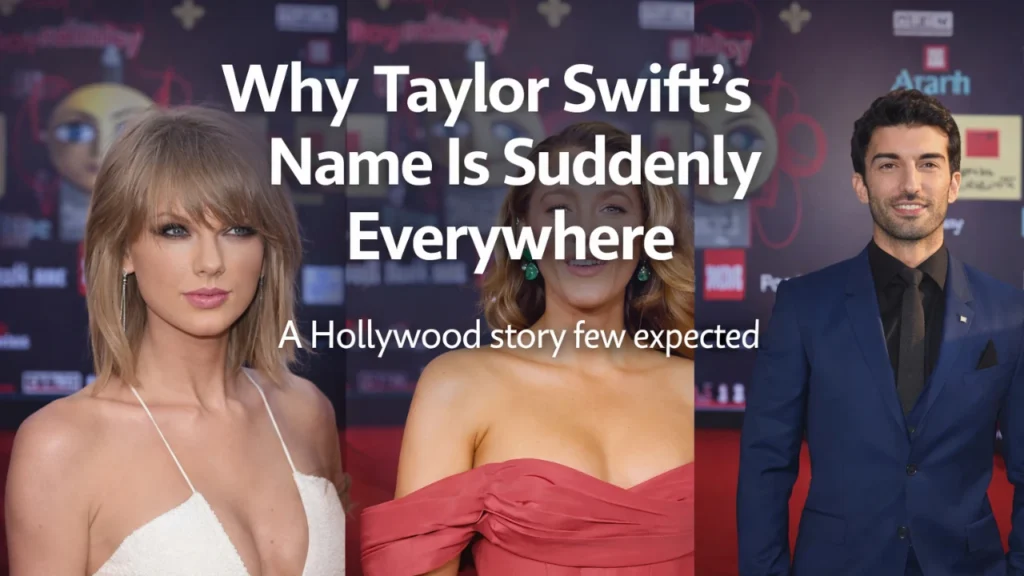
Taylor Swift is no stranger to headlines, but this time, her name is trending for reasons that go far beyond music or tours.
Over the past few days, Taylor Swift has been pulled into a growing public conversation surrounding a legal dispute tied to the film It Ends With Us. Newly revealed text messages involving Blake Lively and references to director Justin Baldoni have placed Swift’s name in the middle of a story about boundaries, power, and workplace conduct in Hollywood.
Here’s how it all came together, and why it matters.
How Taylor Swift’s Name Entered the Story
Court filings connected to the lawsuit surrounding It Ends With Us recently made private text messages public. Among those messages were conversations in which Blake Lively referenced Taylor Swift while discussing concerns about Justin Baldoni’s conduct during the production.
According to reporting, Lively allegedly showed Baldoni messages in which Swift was described using strong language — not as a legal actor in the case, but as someone whose opinion and presence held weight within Lively’s support circle.
Importantly, Taylor Swift is not accused of wrongdoing and is not a defendant in the lawsuit. Her involvement is entirely contextual — yet her name carries enough cultural gravity to shift public focus instantly.
Why These Text Messages Sparked Such Strong Reactions
Any mention of Taylor Swift tends to travel fast. But this story gained traction because it intersects with larger conversations already unfolding in the entertainment industry:
- Power dynamics on film sets
- Consent and professional boundaries
- Who feels safe speaking up — and who doesn’t
- How support networks function behind the scenes
When Swift’s name appeared in legal documents, it added emotional weight to Lively’s account — not because Swift was involved in the dispute, but because she represents influence, protection, and loyalty within a trusted circle.
Jenny Slate’s Comments Added More Context
Adding to the growing discomfort around the production, actress Jenny Slate, who also worked on It Ends With Us, publicly described parts of the filming experience as “gross” and “disturbing.”
While Slate did not directly reference Taylor Swift or the lawsuit details, her comments reinforced the idea that the set environment was difficult for multiple people involved. That alignment between legal claims and independent experiences amplified public concern.
Why Taylor Swift Became a Symbol in This Moment
Taylor Swift’s role here isn’t about the dispute itself — it’s about what her name represents.
For many fans and observers, Swift stands for:
- Vocal advocacy for artists’ rights
- Strong personal loyalty
- Willingness to confront unfair power structures
So when her name appears — even indirectly — in a situation involving alleged misconduct, audiences instinctively read symbolism into it.
This is why headlines referencing “Taylor Swift texts” spread rapidly, even though the legal substance of the case does not center on her actions.
What This Reveals About Fame and Legal Narratives
This moment underscores a growing reality:
In high-profile legal disputes, fame itself becomes part of the story.
Even without testimony or wrongdoing:
- A celebrity’s name can influence public interpretation.
- Private conversations become headline material.
- Emotional alliances can shape how stories are framed.
Taylor Swift didn’t step into this spotlight — but the spotlight found her anyway.
The Bigger Picture: Culture, Power, and Accountability
Beyond individual names, this situation reflects a broader cultural reckoning in entertainment:
- Women feel empowered to document and challenge uncomfortable situations.
- Legal systems expose behind-the-scenes realities.
- Audiences demanding transparency over silence
Taylor Swift’s presence in this story, however indirect, highlights how social influence intersects with accountability in ways that weren’t visible a decade ago.
Final Takeaway
Taylor Swift is not the subject of the lawsuit — but her name’s appearance tells us something important:
Support systems, influence, and private advocacy now matter publicly.
As legal processes continue and more details surface, one thing is clear — modern celebrity narratives are no longer confined to red carpets or record charts. They spill into courtrooms, text messages, and cultural conversations that reshape how power is seen and challenged.