

It started the way most internet earthquakes do.
Quietly. Almost unnoticed.
A few seconds of television. A familiar face. Nothing outrageous. No scandal. No speech. Just… a clip.
And somehow, within hours, Ryan Seacrest was everywhere — trending timelines, side-by-side screenshots, reaction memes, worried takes, jokes, think-pieces, and debates that felt way bigger than the moment itself.
This isn’t just about a clip blowing up online.
It’s about how the internet chooses its moments, and why some clips explode while others disappear into the scroll.
Let’s unpack how one short clip jumped from TV to TikTok to global conversation — and what it reveals about us.
The Moment That Sparked It All
The clip itself was ordinary. A routine on-air appearance. Same studio. Same role. The same voice people have grown up with.
But something felt… different.
Viewers noticed first. Then paused. Then rewound. Then clipped.
Screenshots started circulating with captions like:
- “Am I imagining this?”
- “Is it the lighting?”
- “Why does he look so different?”
No one was aggressive at first. Just curious. And curiosity is the internet’s favorite fuel.
The Timeline: How the Clip Took Over
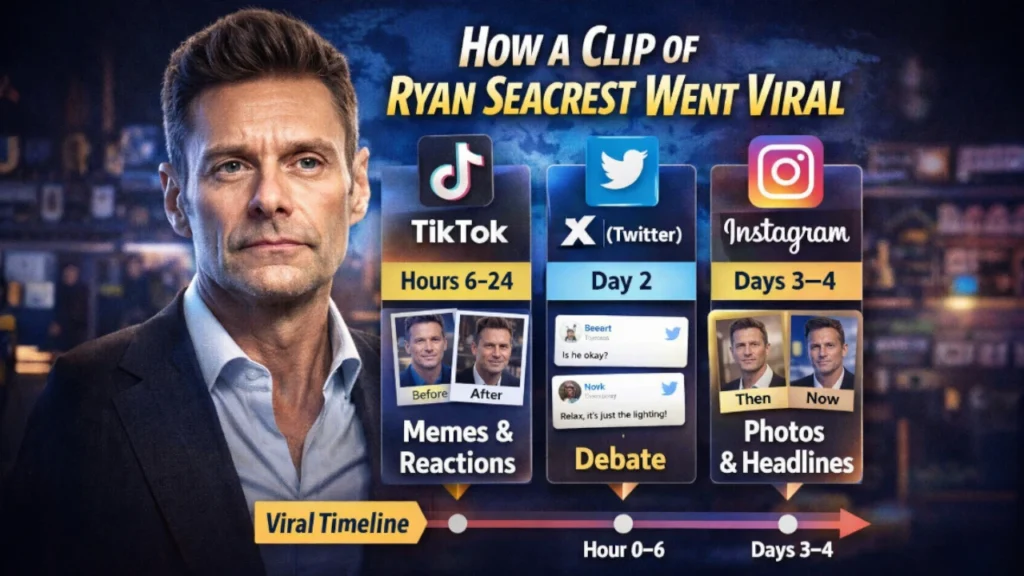
Hour 0–6: The First Ripples
The earliest shares came from casual viewers posting screen grabs and short clips. Nothing viral yet — just a few thousand views and comments driven by confusion, not outrage.
This phase matters. Viral moments almost always begin with:
“Wait… is it just me?”
Once that question appears, the timer starts.
Hour 6–24: Meme Energy Kicks In
TikTok picked it up next — and TikTok doesn’t analyze. TikTok reacts.
Creators:
- Compared old clips vs. new ones
- Used trending sounds to dramatize the “difference.”
- Added exaggerated zoom-ins and captions
At this stage, the tone shifted. What began as concern turned into humor, remix culture, and exaggeration.
Memes don’t need facts.
They need a feeling that people instantly recognize.
Day 2: X (Twitter) Turns It Into a Debate
This is where everything leveled up.
X didn’t just react — it argued.
Threads popped up about:
- Unrealistic beauty standards for aging men
- How lighting and camera angles distort reality
- Whether the internet oversteps with celebrity appearances
Two opposing sides formed:
- “Why are we dissecting this?”
- “Why can’t we talk about it?”
Once a moment becomes a debate instead of a joke, mainstream coverage isn’t far behind.
Day 3–4: Instagram Makes It Visual
Instagram didn’t drive the conversation — it validated it.
Carousels. Side-by-side photos. Story polls. Celebrity tea pages reposting content originally made elsewhere.
By now, the clip wasn’t just viral.
It was canon.
When Instagram archives a moment, it stops being fleeting and starts feeling permanent.
Why This Clip Went Viral (And Not a Thousand Others)
Here’s the part most people miss:
Virality isn’t random — it’s emotional math.
1. Familiar Face + Small Change
Ryan Seacrest isn’t shocking. He’s comfortable.
And when something familiar changes — even subtly — our brains light up. We notice deviation faster than novelty.
A small difference in a well-known face feels bigger than a huge change in someone unfamiliar.
2. Ambiguity Is More Powerful Than Certainty
The clip didn’t explain itself.
No context. No clear reason. No “answer.”
That’s dangerous on the internet — because ambiguity invites:
- Theories
- Reactions
- Projections
People filled the gap with their own ideas, fears, humor, and assumptions.
3. It Tapped Into Collective Anxiety
This moment wasn’t really about one person.
It touched on:
- Aging in the public eye
- Image pressure
- How much scrutiny is “too much”
- How social media magnifies everything
When a clip reflects something we worry about, it spreads faster.
4. It Was Safe to Share
No moral risk.
No political divide.
No graphic content.
People could share it without backlash — just curiosity or humor. That makes virality easy and frictionless.
From Meme to Mainstream Coverage
Once traditional entertainment media picked it up, something interesting happened.
The tone softened.
Headlines shifted from jokes to explanations. Articles talked about lighting, camera tech, and public perception. The moment matured — but it never lost momentum.
That’s the final stage of virality:
When the internet jokes… then reflects.
What This Teaches Us About Internet Culture
This wasn’t cruelty disguised as curiosity.
And it wasn’t harmless fun either.
It lived in the gray zone — where most viral moments exist.
It shows how:
- A clip doesn’t need drama to explode.
- Collective attention is driven by shared recognition.
- The internet doesn’t wait for context — it creates it.
And once a moment hits that critical mass, even the person at the center of it doesn’t control the narrative anymore.
The Bigger Question We’re Left With
Next time a familiar face trends for “looking different,” ask yourself:
Are we reacting to them —
Or to the passage of time, pressure, and visibility we all feel in smaller ways?
Because most viral moments survive not because they shock us…
But because they mirror us.
And that’s why one simple clip didn’t just trend —
It stuck.