Here’s the uncomfortable truth:
Almost nobody reads app permissions anymore.
We download an app.
A screen pops up.
We tap Allow.
And move on.
It’s not laziness.
It’s a habit.
But in 2026, that small habit quietly shapes how much of your digital life apps can see, collect, and influence.
What App Permissions Actually Control Now
Years ago, permissions were simple:
- Camera
- Storage
- Contacts
Today, they control far more.
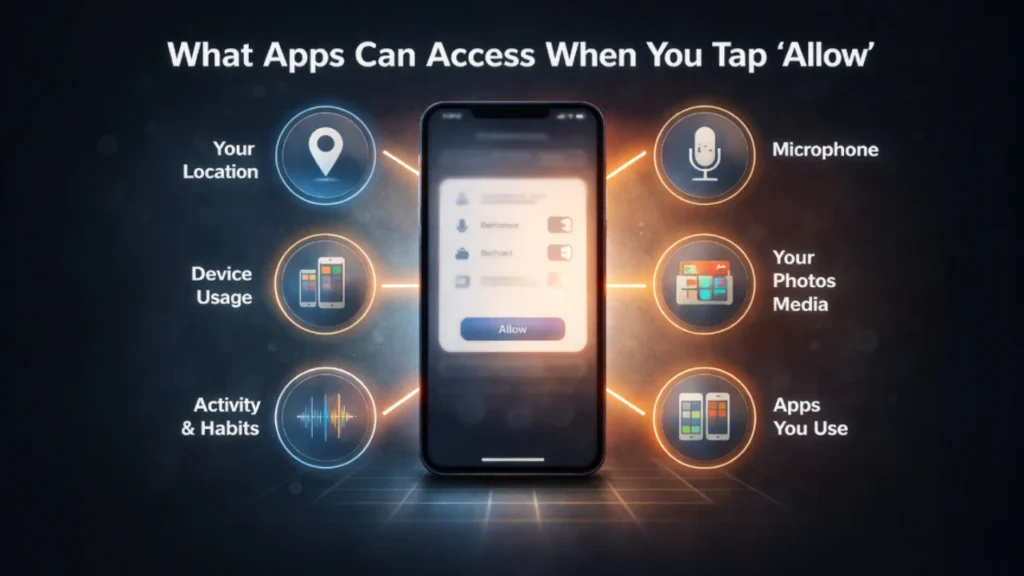
Modern apps can request access to:
- Your location — all the time
- Your microphone — even in the background
- Your photos — beyond what you upload
- Your device usage patterns
- Other apps you use
Permissions aren’t just technical checkboxes anymore.
They define how deeply an app lives inside your phone.
Why App Permissions Hit Different in 2026
Three things changed.
1. Apps Got Smarter
AI-powered apps don’t just store data.
They analyze it.
Usage habits.
Typing behavior.
Movement patterns.
Permissions decide what data fuels that intelligence.
2. Background Access Is Normalized
Many apps don’t need to be open to work anymore.
Location tracking.
Listening for commands.
Syncing data silently.
All legal.
All permission-based.
3. Phones Became Central to Life
Banking.
Health tracking.
Work communication.
Personal memories.
Permissions now affect core life functions, not just entertainment.
Why Most People Still Ignore Permissions
Because the system trained us to.
- Pop-ups appear at the worst moment.
- Language is vague
- Saying “Allow” feels necessary to continue
- “Deny” sounds like breaking the app.
So people do what feels easiest.
Tap.
Accept.
Move on.
This Is Where People Get It Wrong
Many users believe this:
“If an app is popular or comes from a trusted brand, permissions aren’t a big deal.”
That’s the mistake.
Popularity doesn’t limit access.
Ratings don’t reduce data use.
Brand names don’t change what the app can collect.
Permissions work the same way for:
- A small app
- A viral app
- A global tech giant
If access is allowed, the door is open.
What Actually Happens When You Deny Permissions
Here’s the part people rarely test.
Most apps:
- Still work with limited permissions.
- Only block specific features.
- Ask again later, not immediately fail.
You don’t need to give full access on day one.
Smart users:
- Allow only what’s required.
- Expand access if needed later.
- Review permissions once every few months.
It takes minutes.
It makes a difference.
Why This Will Still Matter in 2027 and Beyond
Apps aren’t getting simpler.
They’re getting:
- More personalized
- More predictive
- More connected
Future permissions won’t just ask:
“Can we access your camera?”
They’ll silently shape:
- Recommendations you see
- Ads you’re shown
- Content you’re pushed toward
Permissions don’t just affect privacy.
They affect influence.
The Real Takeaway
This isn’t about fear.
It’s about awareness.
You don’t need to read every word.
You just need to pause once.
Because the most powerful permissions aren’t dramatic.
They’re quiet.
And they’re granted every day without a second thought.
Final Question
If apps inside the phones are becoming smarter every year, should we still be tapping “Allow” without reading — or is it time to slow down?
Drop your take in the comments 👇