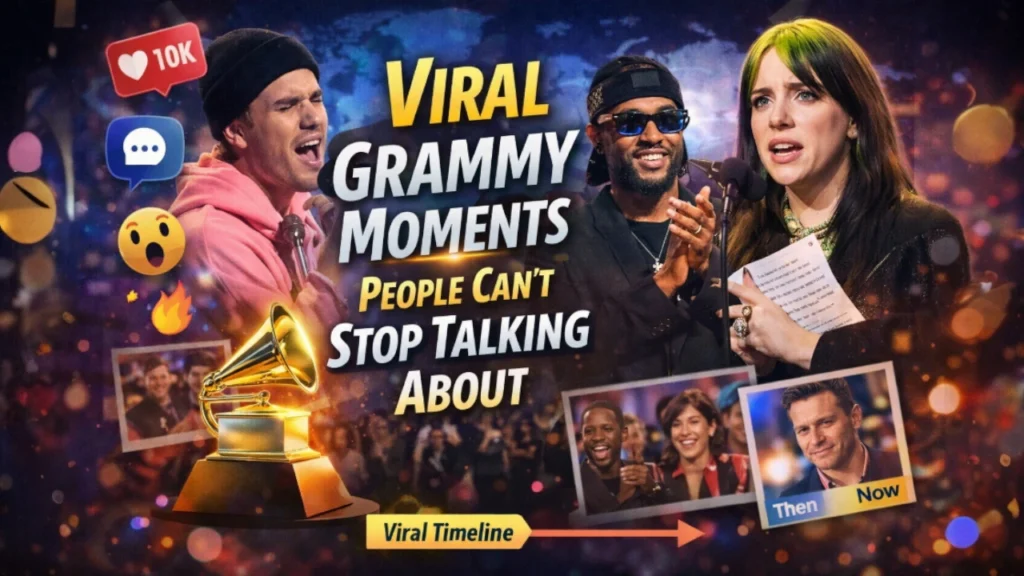
Every year, the Grammys promise music’s biggest night.
And every year, the internet quietly laughs and says: We’ll see.
Because the real Grammys don’t end when the trophies are handed out. They begin minutes later — clipped, paused, zoomed, subtitled, memed, debated, and reposted until one moment becomes everyone’s moment.
This wasn’t just an award show. It was a global feed refresh.
Here’s why certain Grammy moments escaped the industry bubble — and lived rent-free on social timelines everywhere.
The Performances That Took Over the Internet
Some performances are praised by critics.
Others are replayed by strangers at 2 a.m.
The difference? Emotion over perfection.
On social media, it wasn’t about flawless vocals or pristine choreography. The most replayed clips had at least one of these:
- A stripped-down moment that felt almost too personal
- A surprise collaboration no one saw coming.
- A subtle pause — a breath, a look, a silence — that viewers projected meaning onto
Short clips circulated without context. And that worked in their favor.
When a performance can be understood without explanation, it doesn’t stay inside music circles. It spills into everyone’s feed.
That’s how one stage moment becomes:
“Did you see that part?”
And suddenly, millions have.
Why Acceptance Speech Reactions Went More Viral Than the Awards
Very few people can tell you who won what.
But they remember who looked shocked, who smiled politely, and who didn’t clap.
The Grammys are a reaction factory.
Cameras cut to:
- Artists processing a loss in real time
- Unexpected standing ovations
- Faces that say everything without saying anything
These reactions worked online because they felt unscripted — almost accidental.
The internet doesn’t trust the Polish.
It trusts micro-expressions.
One raised eyebrow or frozen smile travels faster than a full speech ever could.
When the Grammys Turn Political (And the Internet Leans In)
Award shows have always been political.
What’s different now is how fast those moments escape context.
A single line from a speech becomes a screenshot.
A pause becomes a quote.
A symbol becomes a hashtag.
For some viewers, these statements felt necessary.
For others, intrusive.
But disagreement is oxygen online.
What mattered wasn’t what side you were on — it was that the moment invited discussion beyond music:
- Culture
- Identity
- Power
- Representation
Once that happens, the Grammys stop being an entertainment event and start functioning like a digital town square.
And those moments always travel farthest.
Why Some Grammy Clips Went Global (And Others Didn’t)
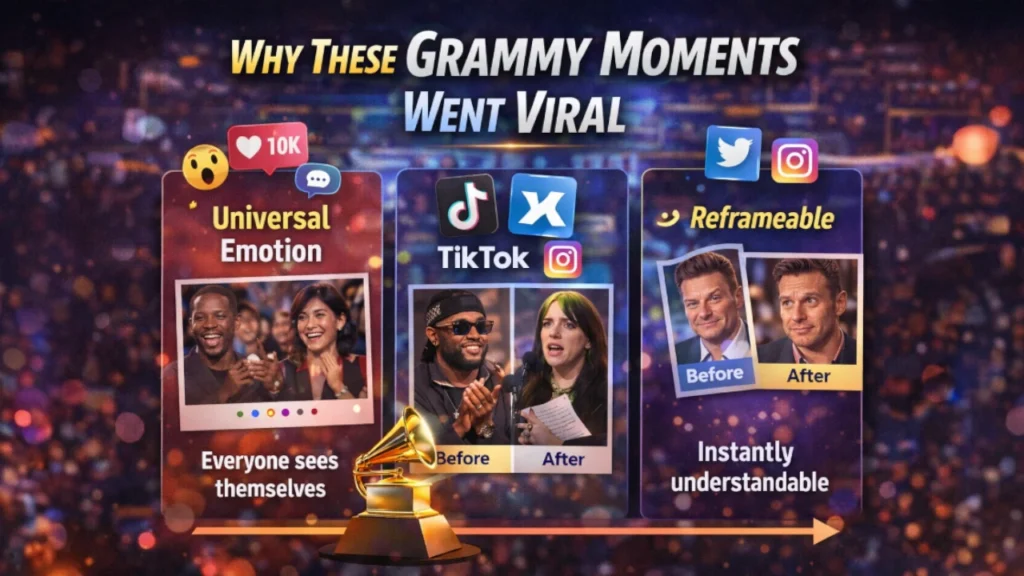
Here’s the pattern most people miss:
1. They Didn’t Require Insider Knowledge
You didn’t need to know the artist’s discography.
You didn’t even need to know the category.
The clip made sense on its own.
2. They Triggered a Shared Emotion
Not admiration. Not outrage.
Recognition.
People shared because they felt seen — awkwardness, pride, disbelief, vulnerability. Emotions we all recognize instantly.
3. They Were Short Enough to Be Reframed
TikTok thrives on reinterpretation.
X thrives on commentary.
Instagram thrives on visuals.
The viral Grammy moments worked because they could be reshaped to fit every platform’s personality — without losing impact.
Memes Didn’t Cheapen the Grammys — They Amplified Them
There’s a belief that memes diminish seriousness.
The opposite happened.
Memes:
- Kept moments alive longer
- Pulled in people who didn’t watch the show
- Turned passive viewers into active participants
When people remix a moment, they’re not mocking it — they’re claiming it.
That’s not disengagement.
That’s modern relevance.
The Grammys as a Mirror, Not a Stage
The reason these moments spread wasn’t celebrity.
It was a reflection.
We weren’t just watching artists react.
We were watching ourselves navigate success, loss, visibility, and voice — played out on a massive screen.
That’s why the biggest Grammy moments didn’t feel like entertainment.
They felt human.
Why We’ll Keep Talking About These Moments Long After the Show
Weeks from now, most trophies will be forgotten.
But the clips?
They’ll still be referenced.
Still reshared.
Still argued over.
Because the modern Grammy legacy isn’t written by winners —
It’s written by the moments the internet refuses to let go.
And every year, without fail, one truth remains:
The Grammys may end in one night —
But the conversation never does.