

The Shared Behavior Almost Everyone Has
Think about a normal day.
You check your phone in the morning.
You look at a screen for work.
You scroll between tasks.
You relax… by watching another screen.
By evening, you’re not physically tired.
You’re mentally drained.
And the strange part is this:
You didn’t do anything that felt hard.
Yet the exhaustion is real.
This Isn’t About “Too Much Screen Time”
That’s the explanation everyone jumps to.
But here’s what doesn’t add up:
People have spent long hours reading, watching TV, and working at desks for decades.
And yet, many say screens feel more exhausting now than they did before.
So something else changed.
What Your Brain Is Actually Doing All Day
When you use screens today, your brain isn’t just consuming information.
It’s constantly switching modes.
- Reading → responding
- Watching → deciding
- Scrolling → judging
- Notifications → interruptions
Even when you don’t act, your brain stays alert.
This creates a low-level mental load that never fully turns off.
Not stress.
Not panic.
Just constant engagement.
The Fatigue Comes From Tiny Decisions
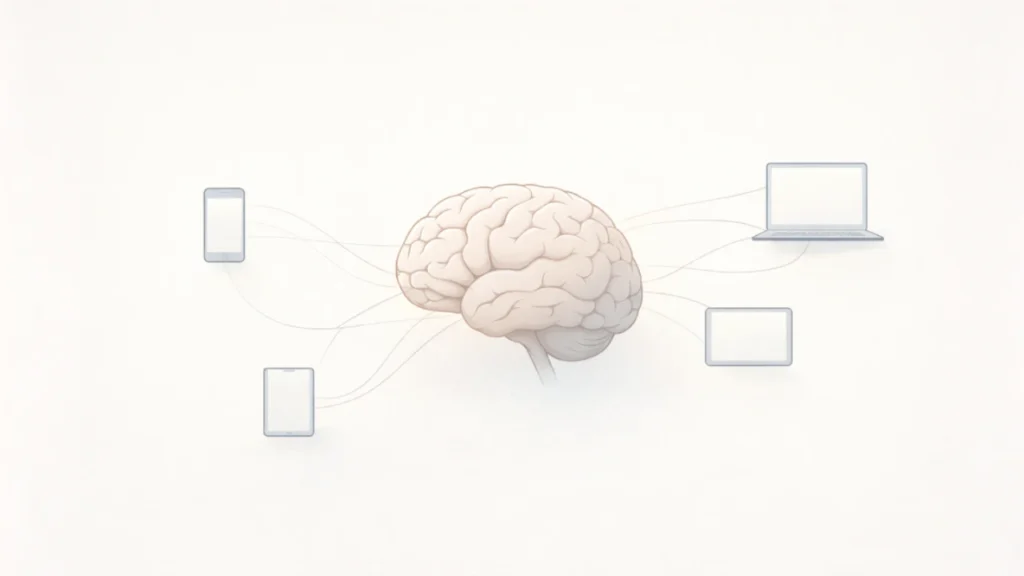
Here’s the key insight.
Your brain gets tired not from effort — but from choice.
Every screen interaction quietly asks:
- Do I respond or ignore?
- Is this important?
- Should I save this?
- What’s next?
Individually, these decisions feel harmless.
Collectively, they drain mental energy.
Why This Feels Worse Than It Used To
Older screen experiences were simpler.
You watched something.
You finished.
You stopped.
Today’s screens are designed to:
- Continue
- Refresh
- Suggest
- Interrupt
There’s rarely a clear “done” moment.
So your brain stays slightly engaged… even when you think you’re resting.
This Is Where People Get It Wrong
Many assume:
“If screens are exhausting me, I’m probably losing my ability to focus and concentrate.”
But that’s backwards.
This is how a normal human brain responds:
- notice patterns
- stay alert
- respond to signals
The issue isn’t weakness.
It’s constant stimulation without recovery.
Why This Isn’t a Panic Situation
This doesn’t mean screens are “bad”.
Or that people need to disconnect entirely.
It means modern screens demand mental presence, not just viewing.
And mental presence, even at low levels, costs energy.
Just like background noise tires you out over time — even if it’s quiet.
What Actually Helps (Without Drastic Changes)
Small adjustments matter more than extreme rules:
- Fewer notifications at once
- Clear stopping points
- One screen at a time
- Moments are remembered by choice, not by alerts.
The goal isn’t less technology.
It’s less mental fragmentation.
The Bigger Picture
Screens didn’t become more exhausting because they got brighter or faster.
They became exhausting because they started asking more from us — quietly, constantly, and all at once.
Your fatigue isn’t imagined.
It’s accumulated.
Final Thought
We often ask how much time we spend on screens.
But a better question might be:
How much mental energy are our screens asking for — and when do they give it back?
This changes how we think about…
rest, attention, and what “being tired” really means in a connected world.