The Quiet Habit Almost Everyone Has
Here’s a behavior most people will recognize instantly:
You install an app, set it up once, and never open its settings again.
Not because you don’t care.
Not because you’re careless.
Because the app seems to work fine.
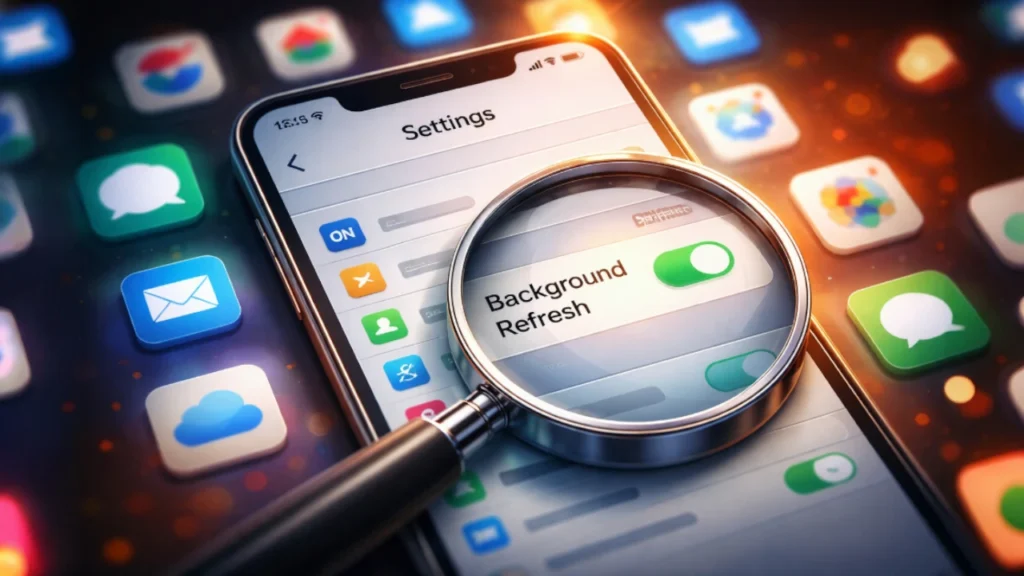
But buried inside almost every app is one setting that silently shapes how the app behaves, what it learns, and how much control you actually have — and most people never touch it.
It’s Not a Button You Tap Every Day

This isn’t a flashy feature.
It’s not something apps remind you about.
In fact, apps work better when you forget it exists.
This setting controls things like:
- How much data an app can use in the background
- When it refreshes itself
- How often does it update content?
- What it prioritizes when you’re not actively using it
You won’t notice it during normal use.
But it’s always working.
Why Apps Rely on This Setting So Much
Apps don’t just react to what you tap.
They plan ahead.
To do that, they need:
- Permission to stay active
- Permission to refresh
- Permission to decide when to do things
That single setting tells the app whether it can:
- Check for updates constantly.
- Sync data silently
- Prepare content before you open it.
From the app’s point of view, this setting is efficient.
From the user’s point of view, it’s invisible.
What Changes When You Actually Look at It
The moment users adjust this setting, common complaints suddenly make sense:
- “Why does this app drain battery?”
- “Why does it feel slow sometimes?”
- “Why does it update itself at odd times?”
- “Why does it keep working in the background?”
It’s not always the app’s fault.
It’s the default behavior you never questioned.
Why Most People Never Check It
Because modern apps train us not to.
- Set up flows rush us forward.
- Defaults are presented as “recommended.”
- Changing settings feels risky.
- Everything still works… until it doesn’t
So people trust the app to decide.
And most of the time, they forget there was a choice.
This Is Where People Get It Wrong
Many users assume:
“If an app is well-made, the default settings are already the best ones.”
That’s the misunderstanding.
Default settings aren’t designed for you.
They’re designed to work for most users most of the time.
That’s not the same thing.
Your habits, usage patterns, and priorities are different — but the app doesn’t know that unless you tell it.
Why This Will Matter Even More in 2027
Apps are becoming:
- More background-driven
- More predictive
- More automated
That means fewer visible actions — and more hidden decisions.
As apps rely more on anticipation instead of reaction, that one overlooked setting quietly becomes more important than ever.
Not because it’s dangerous.
But because it decides who’s really in control.
The Bigger Picture
This isn’t about micromanaging apps.
It’s about awareness.
You don’t need to change everything.
You just need to know where decisions are being made for you.
Because the most influential settings aren’t the ones you tap every day.
They’re the ones you never revisit.
Final Question
If one quiet setting can shape how every app behaves on your phone…
How many choices do you think you’ve actually made — and how many were made for you?
(That’s where the debate begins.)