Here’s a true statement that sounds dramatic but isn’t:
Your phone understands your behavior better than most people in your life.
Not because it listens to your thoughts.
Not because it’s spying on you all the time.
But because it watches patterns.
And patterns reveal more than secrets.
What Your Phone Actually Learns (Without You Noticing)
Your phone doesn’t need personal details to understand you.
It learns you indirectly.
From how you use it.
Over time, your phone builds a quiet profile based on:
- When you wake up and sleep
- How often you unlock the screen
- Which apps you open first in the morning
- Where you go regularly
- How long you stay in certain places
- When you’re most active or distracted
It doesn’t see why you do things.
It learns when and how often you do them.
That’s usually enough.
It Knows Your Habits Better Than You Think
Your phone can often predict:
- When your battery should last longer
- When to silence notifications
- When to surface certain apps or content
- When you’re likely commuting, resting, or busy
From the outside, this feels helpful.
From the inside, it’s data learning your rhythm.
It Understands Your Interests Without Asking
You don’t need to tell your phone what you like.
It notices:
- What you pause on
- What you scroll past quickly
- What you revisit
- What you ignore
Even without reading messages or hearing conversations, behavior tells a story.
And it’s usually accurate.
Why This Matters More Every Year
Smartphones aren’t getting dumber.
They’re getting:
- More contextual
- More predictive
- More personalized
AI doesn’t need personal conversations to influence experiences.
It just needs behavioral signals.
By 2027 and beyond, these systems won’t just react — they’ll anticipate.
This Is Where People Get It Wrong
Most people think:
“As long as it’s not listening to me, I’m fine.”
That’s the misunderstanding.
Phones don’t need audio to learn you.
They don’t need messages.
They don’t need photos.
Patterns are more powerful than content.
Knowing when, how often, and in what order things happen is often enough to predict future behavior.
Privacy isn’t just about secrets anymore.
It’s about signals.
Is This Dangerous or Just Modern Tech?
It’s neither good nor evil on its own.
This intelligence:
- Improves battery life
- Reduces notification overload
- Makes devices feel smoother
- Personalizes experiences
The concern isn’t awareness.
It’s invisibility.
Most of this learning happens without users realizing it’s happening.
What You Can Actually Control
You don’t need to panic or disconnect.
Simple habits help:
- Review app permissions occasionally.
- Limit always-on location access.
- Turn off features you don’t use
- Understand defaults instead of ignoring them.
Small awareness beats fear.
The Bigger Picture
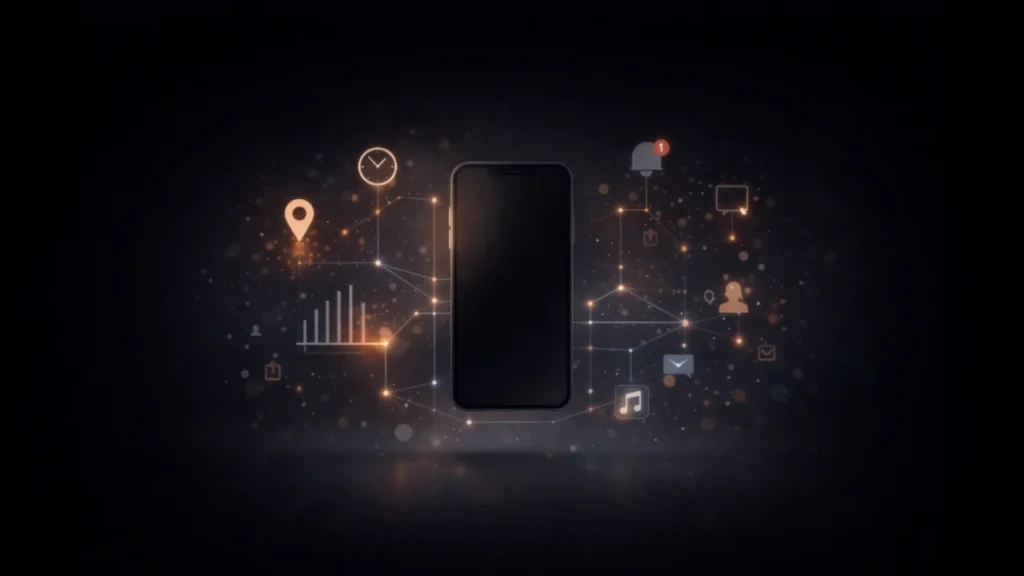
Your phone isn’t “watching” you in the movie sense.
It’s observing patterns at scale.
That’s more subtle.
And in many ways, more powerful.
The smarter phones get, the less obvious that intelligence feels.
Final Question
If your phone already understands your habits, routines, and interests —
How much should a device really know about the person using it?
Drop your thoughts in the comments 👇