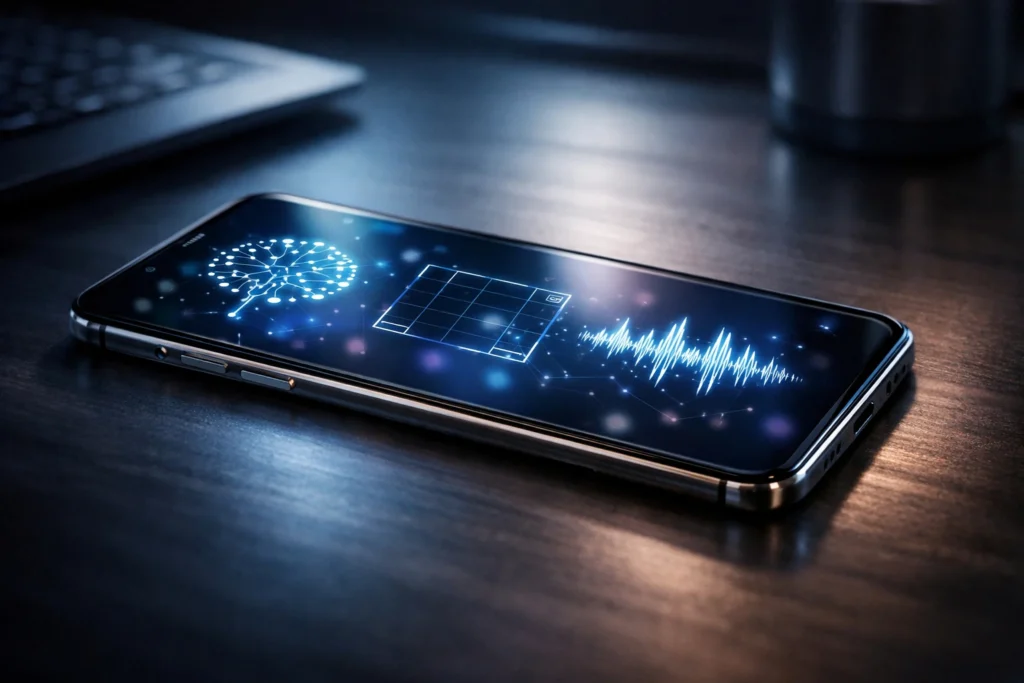
AI phones are no longer “coming soon.”
In 2026, they’re already here — baked into camera apps, call assistants, keyboards, and even battery settings.
Every launch promises the same thing:
Smarter. Faster. Personal.
But once the excitement settles, a real question kicks in:
Are AI phones actually improving daily life — or just adding another buzzword to spec sheets?
Let’s break it down without hype.
What Brands Mean When They Say “AI Phone”
Most AI features on smartphones fall into four buckets:
- 📸 Camera intelligence (scene detection, photo cleanup, video enhancement)
- 🗣️ Voice & text assistants (call summaries, smart replies, on-device help)
- 🔋 Battery & performance optimisation (learning usage patterns)
- 🔐 Privacy & security detection (spam calls, fraud alerts, app behaviour analysis)
Sounds impressive.
But usefulness depends on how often you actually notice them working.
Where AI Phones Actually Feel Useful
1. Cameras Got Smarter (Quietly)
This is where AI truly delivers.
- Auto night shots that don’t need tweaking
- Removing unwanted objects with one tap
- Better portrait edge detection
- Video stabilisation that feels natural
Most users don’t call this “AI.”
They just say, “This camera is good.”
That’s a win.
2. Call & Message Assistance
In 2026, many phones now:
- Summarise long calls
- Detect spam or scam behavior in real time.
- Suggest contextual replies
For busy users, this saves time.
For others, it feels… unnecessary.
Useful? Yes.
Essential? Not yet.
3. Battery Optimisation That Actually Works
AI-driven battery management has improved.
Phones now:
- Learn which apps you rarely open.
- Reduce background drain automatically.
- Prioritise battery for your active hours
You don’t see this feature.
But you feel it when your phone survives the day.
Where AI Phones Still Feel Like Marketing
1. Too Many Features, Too Little Control
Many AI tools:
- Run automatically
- Trigger when you don’t need them.
- Are buried deep in settings
Users either forget they exist or turn them off.
2. “Smart” Assistants That Aren’t Always Smart
Voice commands still struggle with:
- Mixed languages
- Background noise
- Natural conversation flow
They’re helpful for basics — reminders, alarms, notes —
But far from replacing touch interaction.
3. Privacy Concerns Haven’t Disappeared
Even with on-device AI promises, users still ask:
- What data is being processed?
- What stays on my phone?
- What goes to the cloud?
Until brands explain this clearly, trust remains shaky.
Who Actually Benefits Most From AI Phones?
AI phones make the most sense if you:
- Take a lot of photos or videos.
- Handle many calls and messages daily.
- Want better battery life without manual tweaking.
- Prefer automation over micromanagement.
If you only use your phone for basics —
AI is convenient, not revolutionary.
The Real Truth About AI Phones in 2026
AI phones aren’t useless.
They’re just quietly useful, not life-changing.
The biggest problem isn’t the technology.
It’s the expectations.
AI works best when you don’t notice it working.
And the phones doing this well?
They’re the ones not shouting about it.
So, Are AI Phones Worth Buying in 2026?
Yes — but don’t buy one for AI alone.
Buy it for:
- Camera quality
- Battery life
- Software stability
- Long-term updates
If AI improves those?
That’s a bonus.
Final Thought
AI won’t replace smartphones.
It’s simply becoming part of how good phones work.
Do you think AI phones are actually helping — or are brands overselling the idea?
(Drop your take in the comments 👇)